Dreaming of a home with exposed brick, soaring ceilings, and a front door that opens to restaurants, arts venues, and ballgames just blocks away? Downtown Durham offers exactly that kind of lifestyle, and it stands apart in the Triangle because so much of its loft-style housing grew out of real historic buildings. If you are weighing urban living in this part of the region, it helps to understand what makes downtown lofts unique, what daily life feels like, and where the tradeoffs come in. Let’s dive in.
Why Downtown Durham Feels Different
Downtown Durham is both a local historic district and part of a National Register historic district. The city describes it as Durham’s geographical, cultural, financial, governmental, and historical center, with an architectural mix that includes historic storefronts, Art Deco details, and a blend of commercial, high-rise, and lower-rise buildings.
That context matters if you are shopping for a home with character. In many cities, older industrial buildings were cleared for new development, but downtown Durham kept and repurposed much of its historic building stock. That preservation pattern is a big reason you can still find authentic brick warehouse and mill conversions today.
Downtown is also still evolving. Downtown Durham’s 2035 Blueprint, adopted by the City of Durham and Durham County in January 2026, is meant to preserve the area’s character while supporting continued growth. For buyers, that means the district is not frozen in time, but its historic identity remains central to how it develops.
How Loft-Style Living Took Root
The loft market in downtown Durham grew from adaptive reuse. The downtown historic district was listed in the National Register in 1977, and the local historic district followed in 1989, creating a framework that protects historic areas and reviews major exterior changes, demolitions, and new construction.
Instead of replacing old industrial buildings wholesale, Durham turned many of them into mixed-use destinations and residential communities. That is why the area has a more authentic loft inventory than many newer urban districts that simply borrow industrial design cues.
Several well-known properties show how that happened. American Tobacco Campus, West Village, Golden Belt, and Erwin Mill all reflect different parts of Durham’s manufacturing and tobacco history, now reworked into places to live, work, and spend time.
Notable Downtown Durham Loft Examples
American Tobacco Campus
American Tobacco Campus grew from what was once one of the country’s busiest industrial centers. Today, it mixes residences with offices, restaurants, event space, Durham Bulls Athletic Park, and Durham Performing Arts Center.
Its residential component is positioned as living in the heart of downtown, with easy access to dining, shopping, entertainment, and sports. The campus also includes Bay 7, a former tobacco warehouse known for panoramic windows, hardwood floors, and a balcony, which helps illustrate the scale and industrial character found in these repurposed spaces.
West Village
West Village is one of the clearest examples of classic downtown loft living. Its historic buildings feature open floor plans, exposed brick, original wood floors, loft spaces, and ceilings up to 20 feet.
The property also includes a more modern building called the Moore Building. That contrast is helpful if you want a downtown address but are deciding between original industrial details and more updated finishes.
Erwin Mill
The Residences at Erwin Mill preserve architecture dating to the 1890s. Features include exposed brick walls, large atrium windows, and warehouse beams, along with a mix of flats, atrium units, and townhouse-style layouts.
This is a strong example of how loft-style living in Durham is not limited to a single floor plan. Even within one historic property, you may find several layout styles that suit different needs and routines.
Golden Belt Lofts
Golden Belt Lofts offer a smaller, artist-focused live/work setting. The community includes 37 modern lofts, open floor plans, mezzanine sleeping areas in most units, and select one-level corner homes with 14-foot ceilings.
For buyers drawn to creative spaces, Golden Belt shows another side of Durham loft living. It blends industrial volume with a more intimate scale than some of the larger downtown communities.
What Loft Interiors Usually Include
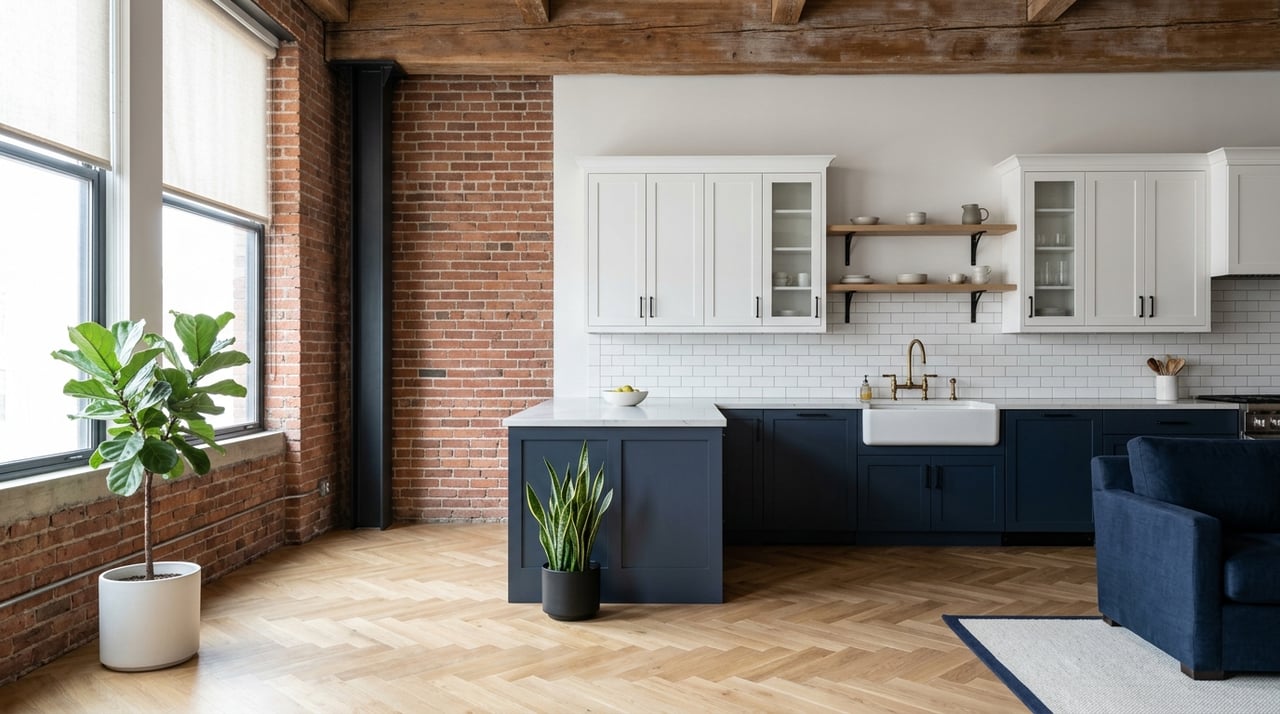
Downtown Durham lofts are not all the same, but several features appear again and again. The classic elements include open layouts, large windows, exposed brick, wood beams, and high ceilings.
Some buildings include especially distinctive details. West Village highlights features such as warehouse elevator buttons, vintage elevator shafts, and ceilings up to 20 feet, while Erwin Mill emphasizes atrium windows and original structural elements. Golden Belt adds mezzanine sleeping areas in many units, giving some homes a distinctly vertical feel.
The result is a housing style with real texture. If you want a home that feels different from a standard apartment or newer suburban build, these preserved industrial features are often the biggest draw.
Historic Character vs Modern Finish
One of the most useful things to know is that “loft-style” can mean different things in downtown Durham. Some homes are true historic conversions with original materials front and center, while others pair historic bones with newer kitchens, appliances, and finishes.
West Village makes that distinction especially clear. Its more modern Moore Building includes stainless steel appliances, granite countertops, espresso cabinetry, and hardwood-style flooring, while the historic loft buildings lean more heavily into preserved materials and original character.
If you are searching in this market, that means you should define what matters most to you. Some buyers want the rougher edges and authenticity of a converted warehouse, while others want a cleaner, more contemporary finish package with just a few industrial touches.
What Daily Life Looks Like
Downtown Durham is compact, urban, and highly walkable. Downtown Durham Inc says the core is less than one square mile, yet it includes restaurants, shops, galleries, entertainment venues, and a walking-tour-oriented map system.
That concentration is a big part of the appeal. The lifestyle is less about private land and more about being close to what you enjoy doing, whether that means dinner out, a show, a baseball game, or simply being able to walk to everyday destinations.
Downtown Durham Inc also notes that downtown has more than 75 restaurants and is anchored by destinations like DPAC, the Carolina Theatre, and Durham Bulls baseball. For many buyers, that convenience is what turns a loft from an interesting design choice into a true lifestyle fit.
Amenities and Mobility
Many downtown loft communities come with shared amenities that help offset the smaller footprint typical of urban living. West Village advertises two resort-style pools, two bark parks, and a 24-hour fitness studio.
Erwin Mill highlights resident parking, building access controls, and nearby grocery, coffee, dining, and retail within a city block. At American Tobacco Campus, the appeal extends beyond the residences themselves and into the larger campus environment, where dining, entertainment, and social activity are built into the setting.
Transit can also be a meaningful advantage. Durham Station is the main transportation hub and connects riders to GoTriangle, Greyhound, Megabus, and Amtrak, while GoDurham routes including 700 and 705 serve downtown. If you value car-light living or want regional connections without relying entirely on driving, that is worth noting.
Parking Works Differently Here
Parking in downtown Durham is available, but it is managed more like an urban center than a suburban neighborhood. Downtown Durham Inc says the City of Durham uses Passport for public parking, while American Tobacco Campus uses ParkMobile.
That does not mean parking is impossible. It means you should expect a system of decks, public parking tools, and building-specific rules rather than a private driveway or oversized garage.
Bike access is also part of the picture, with bike parking maps available for downtown users. If your lifestyle includes walking, biking, or mixing driving with transit, downtown can feel very practical.
The Tradeoffs to Understand
Historic loft living comes with real advantages, but also some important limits. If a property is locally designated historic, exterior modifications require a Certificate of Appropriateness before work begins.
According to Durham, that review can apply to changes involving additions, siding, doors, windows, landscaping, lighting, paving, and walls or fences. In the Downtown Historic District Overlay, development must also comply with the downtown preservation plan and related standards.
For some buyers, that oversight is part of what protects downtown’s visual character. For others, especially those who want maximum flexibility to make visible exterior changes, it may feel restrictive.
Who This Lifestyle Fits Best
Downtown Durham’s housing mix is more apartment- and condo-heavy than a traditional detached-home area. Durham Neighborhood Compass reports 6,304 residents in the Downtown neighborhood, with 41.8% renter households and an estimated rent cost of $1,411, reinforcing that this is an urban residential district shaped by lofts, apartments, and mixed-use buildings.
In practical terms, loft-style living often suits buyers who want character, walkability, shared amenities, and a lively downtown setting. It may be especially appealing if you value design, proximity, and the energy that comes with a more active street environment.
It may be less ideal if your top priorities are a large private yard, minimal building rules, or a quieter suburban street pattern. The right fit usually comes down to how you want to live day to day, not just which features look good in listing photos.
What to Keep in Mind as You Search
If downtown Durham loft living is on your radar, it helps to compare buildings carefully rather than treating them as one category. Floor plans range from studios and one-bedrooms to larger two-, three-, and even four-bedroom options in some communities.
You will also want to weigh character against convenience. One building may offer original brick, beams, and dramatic ceiling height, while another may offer a more updated finish package, stronger amenity set, or easier parking setup.
Most of all, think about your routine. The best downtown loft for you is the one that matches how you actually want to spend your mornings, evenings, and weekends.
If you are considering a move in Durham or anywhere across the Triangle, working with a broker who understands both the architecture and the lifestyle tradeoffs can make the search much clearer. For tailored guidance and a concierge-level approach, connect with Brooke Miller Gelhaus.
FAQs
What makes Downtown Durham lofts different from newer loft-style apartments?
- Downtown Durham includes many true historic conversions, so you may find original brick, wood beams, warehouse details, and preserved industrial architecture rather than only newer buildings with loft-inspired finishes.
What kinds of floor plans are available in Downtown Durham loft communities?
- Options vary by building and can include studios, one-bedroom, two-bedroom, and in some communities even three- and four-bedroom layouts, along with mezzanine, atrium, and townhouse-style designs.
What is daily life like in Downtown Durham for loft residents?
- Downtown Durham is compact and walkable, with restaurants, shops, galleries, entertainment venues, and transit connections all concentrated in less than one square mile.
Do historic properties in Downtown Durham have renovation rules?
- Yes. Durham requires a Certificate of Appropriateness for exterior changes to locally designated historic properties before work begins.
Is parking available for Downtown Durham loft buildings?
- Yes, but it is typically managed through parking decks, public parking systems, and building-specific arrangements rather than private driveways.
Who is usually the best fit for Downtown Durham loft-style living?
- Buyers who want historic character, shared amenities, walkability, and an active urban setting are often the best fit for this style of living.