Wondering what day-to-day life actually feels like in Raleigh-Durham? Maybe you are relocating for work, sizing up neighborhoods, or weighing urban energy against a quieter suburban routine. You want clarity on commutes, parks, dining, and how each pocket of the Triangle fits different lifestyles. This guide walks you through everyday living and neighborhood vibes so you can picture your week, not just your weekend. Let’s dive in.
Raleigh-Durham at a glance
Raleigh is North Carolina’s capital and the hub of Wake County, while Durham blends historic industry with a creative, university-fueled scene. Together with Chapel Hill and Research Triangle Park, the region forms the Triangle. You will see a strong mix of education, healthcare, technology, government, and professional services shaping the job market.
The climate is humid subtropical with hot, humid summers and generally mild winters. Outdoor time is easy to find thanks to greenways and parks throughout the area. Daily life often blends car trips with walkable moments in certain neighborhoods, plus a steady calendar of local events and university programming.
Raleigh neighborhoods overview
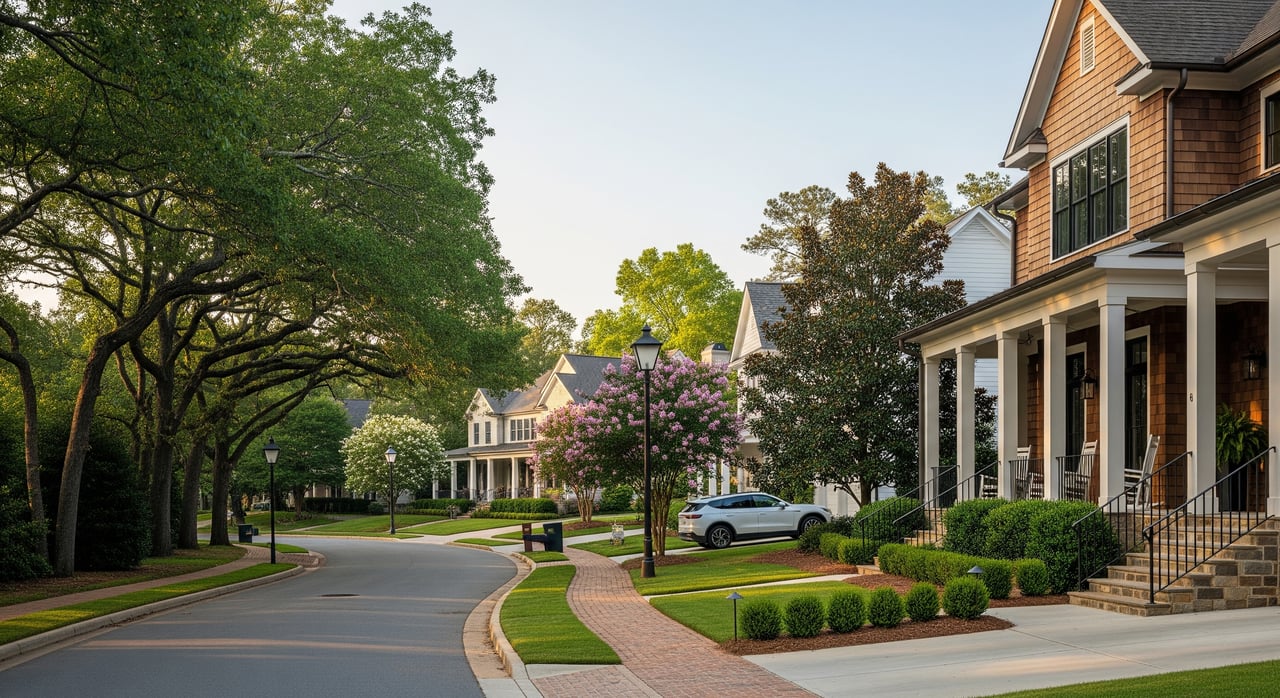
Raleigh offers everything from downtown condos near nightlife to tree-lined streets with classic homes and nearby parks. Here is how a normal week might feel in different areas.
Downtown and Warehouse District
If you like a walkable routine, downtown Raleigh gives you coffee shops, restaurants, museums, and offices in close reach. You can run errands on foot, catch an evening show, and access nearby greenways for a morning jog. Housing leans toward apartments and condos with increasing infill development.
Five Points and Hayes Barton
Five Points and Hayes Barton offer established neighborhoods with older homes and leafy streets. You get local restaurants, quieter evenings, and quick access to central city amenities. Commuting to downtown or out toward I-40 is straightforward from here.
Cameron Village and North Hills
Around Cameron Village and North Hills you will find urban-adjacent living with boutiques, grocery options, and dining nearby. Errands are simple, and there is a steady flow of fitness studios and services close by. Housing ranges from condos and townhomes to bungalows and mid-century homes.
West Raleigh and NC State
West Raleigh neighborhoods put you near the NC State campus and Glenwood South. Expect a mix of historic homes and updated interiors, plus an easy jump to main corridors for commuting. Weekdays feel active but not hectic, with a choice of casual dining and coffee spots.
Durham flavor next door
Durham brings an arts-forward vibe, creative businesses, and revitalized historic spaces, all within an easy drive from many Raleigh neighborhoods. You can enjoy the energy without living in a dense urban center if you prefer a quieter home base.
Downtown Durham and American Tobacco
Downtown Durham and the American Tobacco Campus offer a walkable core with restaurants, small venues, and galleries. You can bike between neighborhoods, shop local, and explore weekend farmers’ markets. Some blocks are very walkable, while other areas nearby remain more car-oriented.
Trinity Park and Old West Durham
Neighborhoods like Trinity Park and Old West Durham blend historic character with small businesses and cafes. The feel is creative and relaxed, with easy access to downtown or Duke-area employment. Housing includes renovated homes and townhomes.
Southpoint and RTP-adjacent areas
Near Southpoint and Morrisville, neighborhoods are designed for commuting convenience to RTP and surrounding employers. Daily life centers on retail centers, nearby parks, and quick highway access. Mixed-use hubs are growing to shorten errands and commutes.
Commutes and getting around
Most people rely on a car for daily errands, especially outside the urban cores. Peak periods can bring congestion on I-40, I-440, US-64, and US-70, and on routes leading to RTP and downtowns. Many professionals now use remote or hybrid schedules, which can ease your commute.
Public transit serves key corridors. GoRaleigh, GoDurham, and GoTriangle operate local and regional buses that work best in central areas and along main routes. Amtrak serves both Raleigh and Durham for inter-city trips, and RDU International Airport provides domestic and international flights. In compact neighborhoods and along greenways, walking and biking are common for short trips.
Pro tip: try a few practice commutes at your target times. Drive, then sample a bus route or bike path if available. You will quickly see which locations match your rhythm.
Parks and greenways
Outdoor space is part of daily life in the Triangle. Raleigh’s Dorothea Dix Park hosts open fields and city events, while Pullen Park offers playgrounds and a classic carousel. William B. Umstead State Park sits between Raleigh and Durham with miles of forested trails for running, hiking, and biking.
In Durham, Sarah P. Duke Gardens is a go-to for a quiet stroll, and Eno River State Park offers shaded trails and river views. Across the region, you will find neighborhood parks, community pools, and long greenway stretches used for morning runs and weekend rides. It is easy to plug outdoor time into a workday.
Food, culture, and nightlife
The dining scene spans Southern comfort, international cuisines, farm-to-table restaurants, and a strong craft beer culture. You will see food halls and independent cafes in downtown cores, plus major grocery anchors in suburban centers. The variety supports any weeknight routine.
Cultural touchstones include the North Carolina Museum of Art and the North Carolina Museum of Natural Sciences in Raleigh. Durham’s performance scene features spaces like the Durham Performing Arts Center alongside independent venues. Larger shows and festivals land across the region, from touring acts at Koka Booth Amphitheatre to the annual NC State Fair.
Housing types and daily routines
Housing choices shape your day. Condos and townhomes near downtown simplify maintenance and can shorten errands, often at the trade-off of less private outdoor space. Single-family homes in suburban areas offer yards and quiet streets, with a routine that leans more on driving.
Across the Triangle, you will find historic bungalows, mid-century homes, new construction neighborhoods, and infill condos. Homeowner association rules and fees vary by community, and property taxes differ by municipality. Your mix of space, maintenance, and commute will help guide the best fit.
Schools and services overview
The region includes the Wake County Public School System, Durham Public Schools, and Chapel Hill–Carrboro City Schools, along with a range of private and charter options. Because school boundaries and programs can change, check official district resources when you are comparing addresses. Choose the location that supports your daily logistics and education goals.
Healthcare access is strong with Duke University Hospital in Durham, UNC Health in Chapel Hill, and WakeMed in Raleigh, plus extensive outpatient networks. Day-to-day services like groceries, specialty food stores, and big-box retail are widely available across both urban and suburban corridors.
Choosing a neighborhood
Use your daily routine as the filter. Start by mapping your likely commute or hybrid schedule. Consider how often you want to walk to coffee, restaurants, or parks, and decide whether a yard is essential or a nice-to-have.
- List your top three priorities: commute, outdoor access, or proximity to dining.
- Test-drive your routes at peak times and try a greenway loop.
- Visit at different hours to sense traffic, activity, and noise.
- Review official sources for transit routes, park programming, school assignments, and local public safety data.
When you line up your lifestyle with location, you will narrow choices fast and feel confident in your decision.
Plan your move with confidence
You do not need to sort this alone. With boutique, founder-led service and deep Triangle expertise, you get clear guidance tailored to your goals. From neighborhood orientation and touring to private, pre-market options and a streamlined closing, you can move with clarity and calm.
If you are ready to explore Raleigh, Durham, and nearby communities, connect with Brooke Miller Gelhaus. You will get discreet, high-touch support and local insight that puts your daily life first.
FAQs
How walkable is everyday life in Raleigh-Durham?
- Walkability is strongest in downtown Raleigh and downtown Durham, while many suburbs and outer neighborhoods are car-dependent with limited sidewalks.
What do commutes to RTP feel like from Raleigh?
- Peak hours can be congested on I-40 and feeder routes; living closer to core corridors or using hybrid schedules often shortens travel time.
What is the weather like across the Triangle?
- Expect hot, humid summers and generally mild winters, with occasional tropical storm impacts in some years.
Which Raleigh-Durham areas are close to parks and greenways?
- Many neighborhoods have nearby parks; highlights include Dorothea Dix Park, Pullen Park, and Umstead in Raleigh, plus Duke Gardens and Eno River near Durham.
Are there public transit options in Raleigh and Durham?
- Yes, GoRaleigh, GoDurham, and GoTriangle provide bus service along key corridors, and Amtrak connects both cities for inter-city travel.