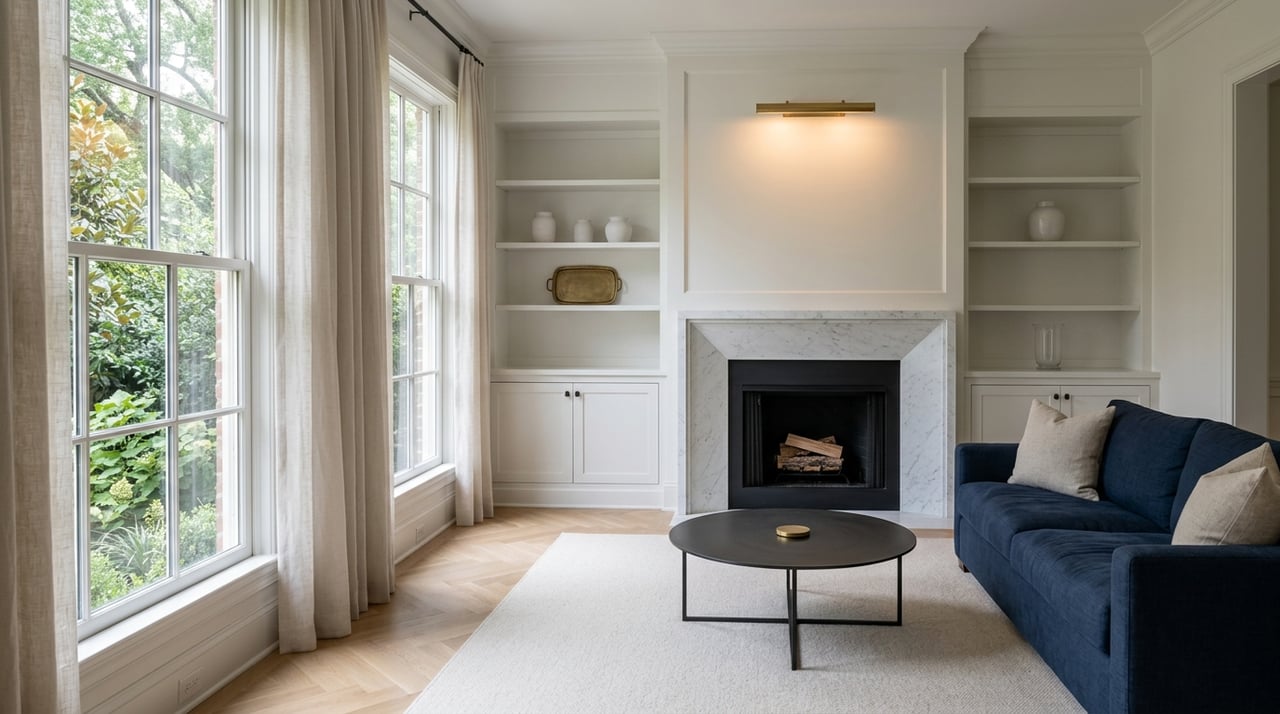
If your Raleigh-Durham home would have flown off the market a few years ago, today’s market may feel different. Buyers now have more choices, spend a lot of time comparing homes online, and notice details that once might have been overlooked. The good news is that thoughtful staging can help your home stand out, reduce buyer hesitation, and support a stronger launch. Let’s dive in.
Why staging matters in Raleigh-Durham
In Raleigh and Wake County, the market has become more selective than it was during the peak seller-market years. Recent local data shows longer days on market, more active listings, and sale-to-list ratios that make presentation and pricing more important than ever. According to Redfin’s Raleigh housing market data, Raleigh homes were spending around 69 days on market in February 2026, while Wake County was closer to 73 days.
That does not mean homes are not selling. It means buyers have room to compare, pause, and move on if a listing feels cluttered, dim, or dated. Doorify MLS’s Triangle market update also points to more inventory and a more balanced environment, which makes first impressions more valuable.
This matters even more because buyers begin their search online. The National Association of REALTORS® reports that buyers across every generation start online, and 83% of internet-using buyers rate photos as very useful in the home search process. If your home does not shine in photos, many buyers may never make it to the showing stage.
Staging is a marketing tool
Staging is not just about making a home look pretty. It is about helping buyers understand the home quickly, emotionally connect with it, and feel comfortable taking the next step.
According to the NAR 2025 home staging report, 83% of buyers’ agents said staging made it easier for buyers to envision the property as their future home. The same report found that 49% of sellers’ agents saw staging reduce time on market, and 29% said it increased the dollar value offered by 1% to 10%.
In a market like Raleigh-Durham, that can be the difference between a listing that sits and one that earns serious attention early. Strong staging supports strong photography, and strong photography helps buyers click, save, share, and schedule a tour.
Start with decluttering and repair
Before you think about furniture or accessories, focus on removing distractions. Many sellers do not need full-scale staging right away. They need a clean, edited home that feels bright, spacious, and well cared for.
The same NAR staging report notes that many agents skip formal staging and instead recommend decluttering and correcting property faults. That is an important point for sellers in Raleigh and Wake County, where buyers are comparing condition closely.
Here is where to begin:
- Remove excess furniture to improve flow
- Clear countertops, shelves, and entry surfaces
- Pack away personal photos and highly specific decor
- Organize closets and storage areas
- Deep clean every room
- Replace burnt-out bulbs and brighten darker spaces
- Repair obvious cosmetic issues like chipped paint, loose hardware, or stained caulk
According to the NAR 2025 Remodeling Impact Report, 46% of buyers are less willing to compromise on the condition of a home. That means visible flaws can create more resistance than many sellers expect.
Stage the rooms buyers care about most
If you are deciding where to spend time and money, prioritize the rooms buyers notice first. The goal is not to stage every inch of the house equally. It is to focus on the areas with the most impact.
The NAR 2025 staging survey found that buyers care most about these spaces:
- Living room
- Primary bedroom
- Kitchen
That same report shows sellers’ agents most often stage the living room, primary bedroom, dining room, and kitchen. For most Raleigh-Durham listings, that is the right order of operations.
Living room first
Your living room often carries the weight of the listing photos. It should feel open, comfortable, and easy to understand at a glance.
Use fewer, better-scaled pieces if possible. Create clear walking paths, let windows breathe, and avoid bulky seating that makes the room feel smaller. If the room has built-ins, molding, or a fireplace, let those features lead the design.
Primary bedroom next
The primary bedroom should feel calm and spacious. Buyers respond well to a simple, restful setup that suggests comfort without feeling too personal.
Neutral bedding, matching lamps, and minimal decor can go a long way. If the room is large, create balance with appropriately scaled furniture so it does not feel empty or awkward in photos.
Kitchen with clean sightlines
You do not need a full kitchen remodel to make an impact. In many cases, a well-edited kitchen with clear counters, good lighting, and a few thoughtful touches will do more than overstyling.
The NAR staging guidance recommends highlighting natural light, using neutral colors, opening up the space, and streamlining decor. In practical terms, that means removing countertop clutter, keeping finishes visually quiet, and making the room feel easy to maintain.
Keep the look bright, neutral, and polished
In a photo-first market, visual calm matters. Buyers in Wake County are highly connected and likely to study listings closely before they ever visit in person. U.S. Census QuickFacts for Wake County shows high broadband access and a well-educated population, which supports the idea that buyers are doing careful digital screening.
That does not mean your home should feel bland. It means the styling should feel edited and cohesive. Aim for a look that helps buyers notice the home itself, not the seller’s belongings.
A few useful guidelines include:
- Open blinds and curtains to maximize natural light
- Use light, neutral wall colors where repainting is needed
- Add texture through rugs, pillows, or bedding instead of strong patterns
- Keep decor minimal and intentional
- Show each room with a clear purpose
For higher-end homes, this often means fewer accessories, stronger furniture scale, and cleaner visual lines. The overall effect should feel elevated without looking overdesigned.
Fix what buyers will question
Staging works best when it is paired with smart pre-listing updates. If a buyer sees worn paint, damaged flooring, or an outdated first impression, styling alone will not remove that objection.
The NAR Remodeling Impact Report points to painting as one of the top recommendations before listing. The same report highlights strong resale appeal for a new steel front door and notes buyer appeal for kitchen upgrades and wood flooring.
That does not mean you should over-improve. Instead, focus on visible items that help your home feel move-in ready and aligned with its price point.
Consider these pre-listing updates:
- Fresh interior paint in key areas
- Front door refresh or replacement if needed
- Flooring repairs or selective replacement
- Minor kitchen updates that improve appearance
- Hardware, lighting, or fixture updates where finishes feel obviously dated
The key is discipline. You want to remove friction, not start a renovation project that delays your launch and exceeds what the market will reward.
Do not overlook curb appeal
Online appeal starts at the curb. If your exterior photos feel flat or your entry looks neglected, buyers may assume the inside needs work too.
The NAR outdoor features report found that 97% of REALTORS® say curb appeal is important in attracting a buyer, and 92% recommend improving curb appeal before listing. It also found strong cost recovery for landscape upgrades.
In Raleigh-Durham, outdoor living is part of the lifestyle story, so your exterior should feel cared for and welcoming. Focus on the front walk, porch, lighting, lawn, and landscaping first.
Simple curb appeal improvements can include:
- Fresh mulch and trimmed plantings
- Pressure washing walks and exterior surfaces
- Painting or cleaning the front door
- Updating porch lighting
- Adding simple planters near the entry
- Keeping the lawn neat and edged
Is staging worth the cost?
For many sellers, yes, especially when staging is targeted and tied to a clear launch strategy. The question is usually not whether every room needs to be professionally staged. It is whether the home will show at its best where buyers are making decisions.
The NAR 2025 staging report gives a useful budget benchmark: the median reported cost for a staging service was $1,500, while agent-handled staging had a median cost of $500. That range helps frame staging as a strategic pre-listing investment rather than an automatic luxury add-on.
A tailored plan may include anything from light consultation and furniture editing to partial or full staging. The right choice depends on your home’s condition, price point, layout, and whether it is occupied or vacant.
Physical staging vs. virtual staging
This is a common question, especially if you are trying to control costs. While virtual staging can help buyers understand an empty room, physical staging is generally the stronger option when credibility and presentation matter most.
According to the full 2025 Profile of Home Staging, buyers’ agents placed higher importance on photos and traditional physical staging than on virtual staging, and 38% said virtual staging was less important. For mid-to-high price point homes in the Triangle, physical staging paired with professional photography is usually the safer choice.
If the home is occupied, physical staging can also help refine what is already there instead of creating a digital version that may not match the in-person experience. That consistency matters when buyers move from online viewing to private showings.
Why a concierge approach helps
Staging is most effective when it is part of a larger plan. That plan should include pricing, repairs, timing, photography, and launch strategy, not just decor choices.
The NAR 2025 buyer and seller trends report shows that sellers rely on agents to price competitively, market effectively, sell within a desired timeframe, and identify ways to improve the home before sale. In practice, that often looks like a concierge-style relationship where your agent helps coordinate the moving parts before the home goes live.
For sellers in Raleigh-Durham, that can mean:
- Prioritizing improvements that support value
- Recommending where staging will have the most impact
- Coordinating vendors and timelines
- Aligning photography with the home’s best presentation
- Building a thoughtful launch plan for maximum early interest
That level of planning can be especially helpful for busy professionals, relocating households, downsizers, and estate-related sales where timing and logistics matter just as much as design.
A smart staging plan is strategic
The best staging plan for your Raleigh-Durham home is not necessarily the biggest one. It is the one that helps buyers see the home clearly, feel confident in its condition, and connect with it from the first photo onward.
In a market where buyers have more options, thoughtful presentation can reduce friction and help your listing compete more effectively. If you are preparing to sell and want a tailored, data-informed plan for staging, pricing, and launch, connect with Brooke Miller Gelhaus for a discreet, high-touch approach built around your goals.
FAQs
Is staging worth it for a Raleigh home sale?
- Yes. In a more selective Raleigh market, staging can help your home stand out online, reduce time on market, and make it easier for buyers to picture themselves in the space.
Which rooms should be staged first in a Wake County home?
- Start with the living room, primary bedroom, and kitchen, since these are the spaces buyers tend to care about most.
How much does home staging cost in the Triangle?
- Based on NAR’s 2025 data, the median reported cost was $1,500 for a staging service and $500 when the seller’s agent handled staging.
Is decluttering enough before listing a Raleigh-Durham home?
- Sometimes. If your home is already in strong condition, decluttering, deep cleaning, and fixing visible issues may be enough to improve photos and showings.
Is physical staging better than virtual staging for Triangle listings?
- Usually, yes. Physical staging tends to be more credible and more useful to buyers than virtual staging, especially for mid-to-high price-point homes.
What should sellers fix before staging a Wake County home?
- Focus on visible issues that create buyer hesitation, such as worn paint, lighting problems, dated finishes, flooring flaws, or weak curb appeal.